Handy

Problem statement: In an era of growing self-empowerment, people are increasingly motivated to take on projects themselves, but many lack the support to get started. DIY enthusiasts often stall in the earliest stages, unsure where to begin or overwhelmed before momentum builds.


Target audience: DIY enthusiasts eager to grow their skills. They’re comfortable tackling projects but need support to move beyond their current level.


Jobs to be done: Users want a clear, supported path from problem to resolution. They need help identifying the issue, gathering the right tools and protective equipment, and understanding potential risks before getting started. With the right education delivered in an informative, approachable way, and backup support available if they get stuck, they can move through projects with confidence and resolve issues more easily.


Decision making: Reference to UX/UI best practices, direct user feedback, how well success matrices are met.
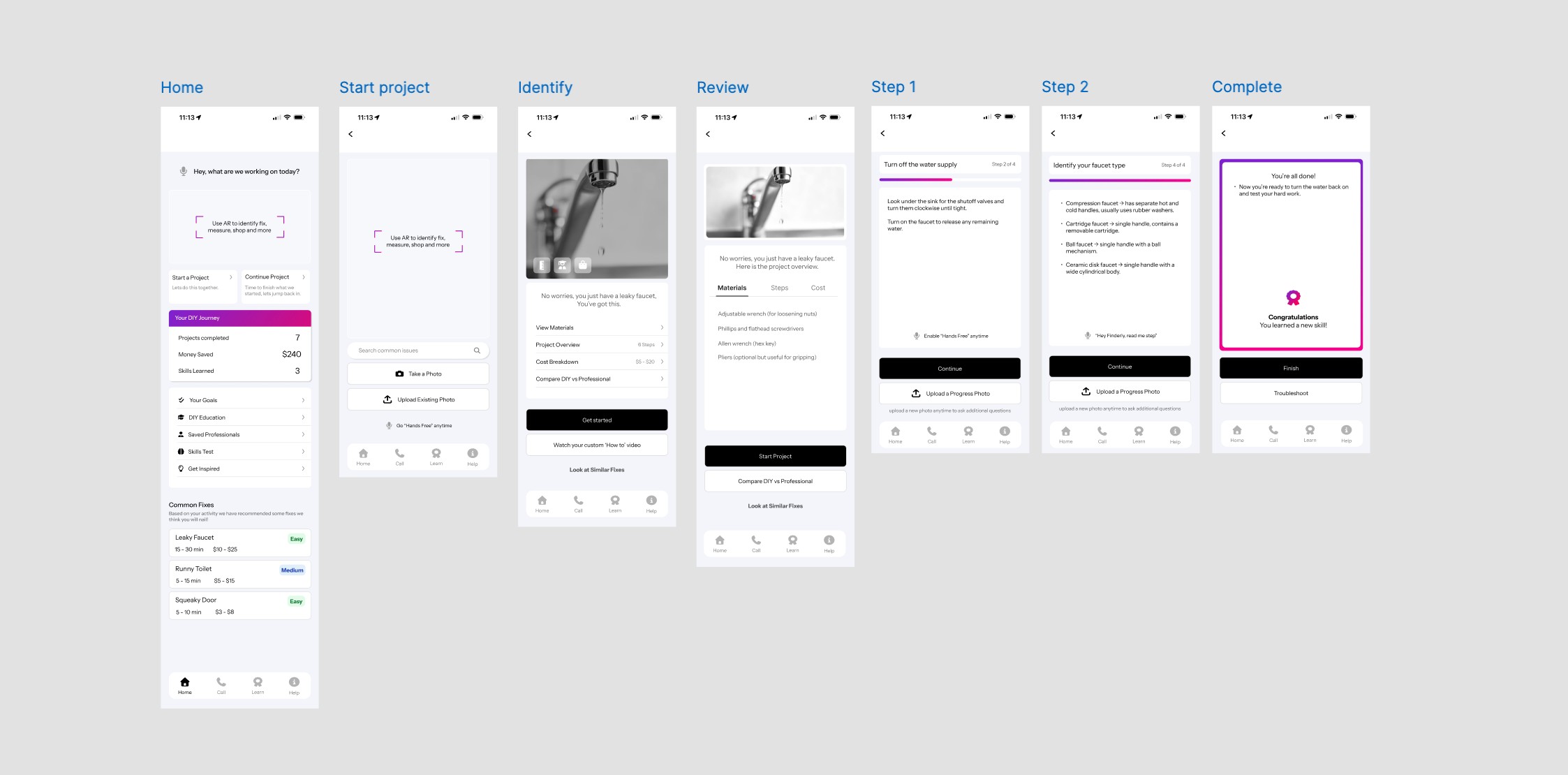
Final deliverables: The final UI leverages brand colors, gradients, glass effect, and intentional iconography to create a modern, polished feel.

Challenge: Avoid user frustration during complicated projects and troubleshooting.

Solution: Provide clear, trackable progress through the progress bar, make steps clear and concise and include an ‘upload a progress photo’ option so the AI feature can maintain contextual support.

More projects

Test Builder

Explore

Pause

Explore

Handy

Problem statement: In an era of growing self-empowerment, people are increasingly motivated to take on projects themselves, but many lack the support to get started. DIY enthusiasts often stall in the earliest stages, unsure where to begin or overwhelmed before momentum builds.


Target audience: DIY enthusiasts eager to grow their skills. They’re comfortable tackling projects but need support to move beyond their current level.


Jobs to be done: Users want a clear, supported path from problem to resolution. They need help identifying the issue, gathering the right tools and protective equipment, and understanding potential risks before getting started. With the right education delivered in an informative, approachable way, and backup support available if they get stuck, they can move through projects with confidence and resolve issues more easily.


Decision making: Reference to UX/UI best practices, direct user feedback, how well success matrices are met.
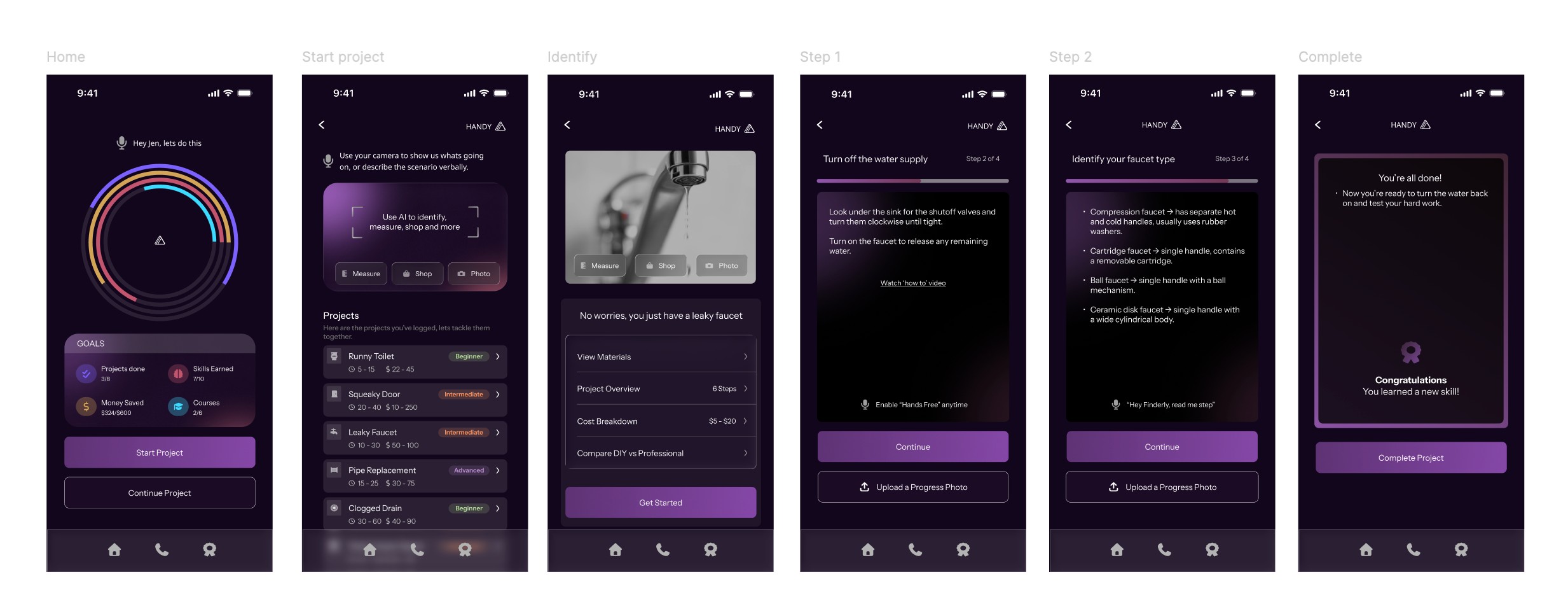
Final deliverables: The final UI leverages brand colors, gradients, glass effect, and intentional iconography to create a modern, polished feel.

Challenge: Avoid user frustration during complicated projects and troubleshooting.

UX Decision: Since users' hands are often occupied during DIY tasks, voice activation and bold, scannable CTAs were essential design considerations.

Challenge: Avoid user frustration during complicated projects and troubleshooting.

Solution: Provide clear, trackable progress through the progress bar, make steps clear and concise and include an ‘upload a progress photo’ option so the AI feature can maintain contextual support.

More projects

Test Builder

Explore

Pause

Explore

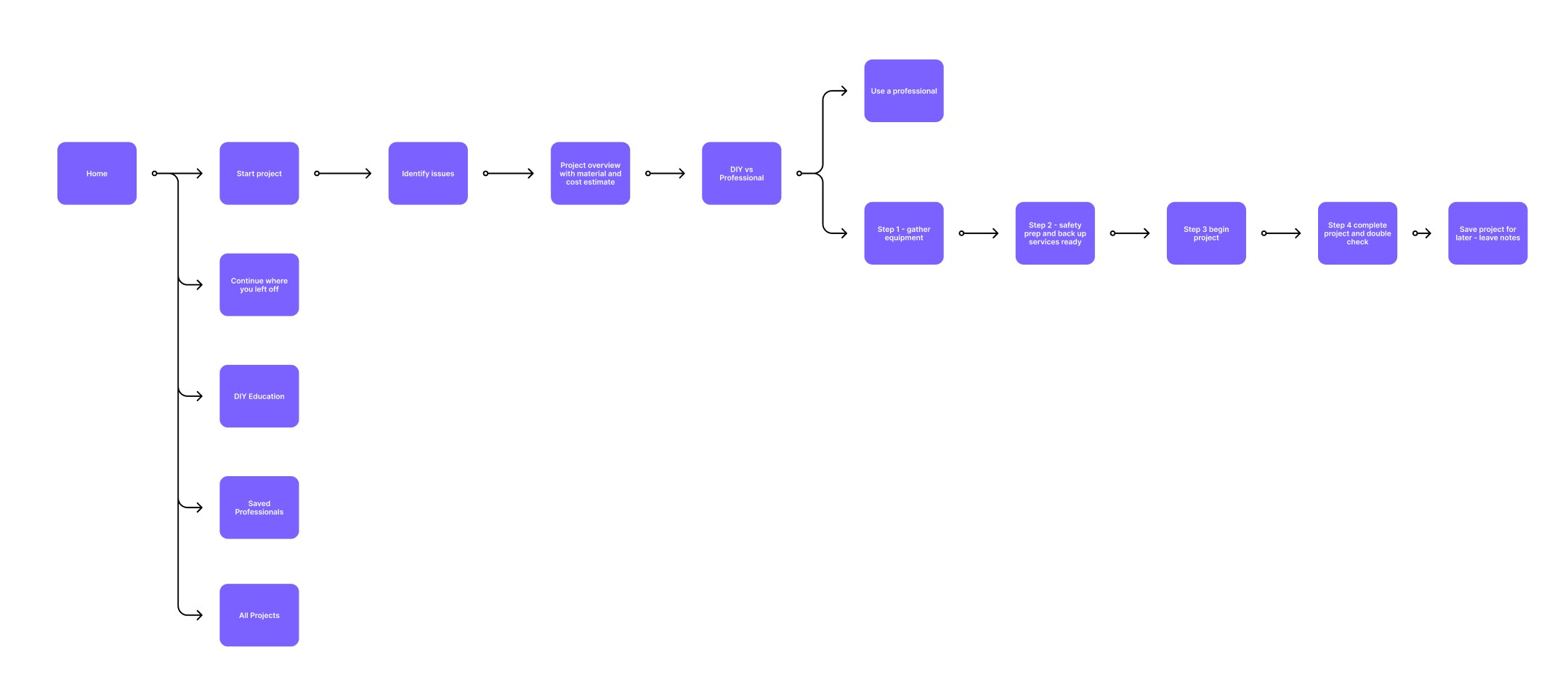
Discovery: My process begins with competitive analysis and journey mapping to define the problem space and establish clear user goals. When possible, I pair this with direct jobs-to-be-done validation to ensure the solution reflects real user behavior. I then iterate through wireframes, heuristic evaluation, and usability testing to improve clarity, safety, and task success.

UX Decision: The home screen was designed around early success metrics to drive retention. The goals tracker serves as a core motivator — encouraging users to start and complete projects.

Final deliverables: After many iterations we decided to go with a dark theme to invoke confidence and authority, both important when engaging with DIY challenges.

Handy

Problem statement: In an era of growing self-empowerment, people are increasingly motivated to take on projects themselves, but many lack the support to get started. DIY enthusiasts often stall in the earliest stages, unsure where to begin or overwhelmed before momentum builds.


Target audience: DIY enthusiasts eager to grow their skills. They’re comfortable tackling projects but need support to move beyond their current level.


Jobs to be done: Users want a clear, supported path from problem to resolution. They need help identifying the issue, gathering the right tools and protective equipment, and understanding potential risks before getting started. With the right education delivered in an informative, approachable way, and backup support available if they get stuck, they can move through projects with confidence and resolve issues more easily.


Decision making: Reference to UX/UI best practices, direct user feedback, how well success matrices are met.
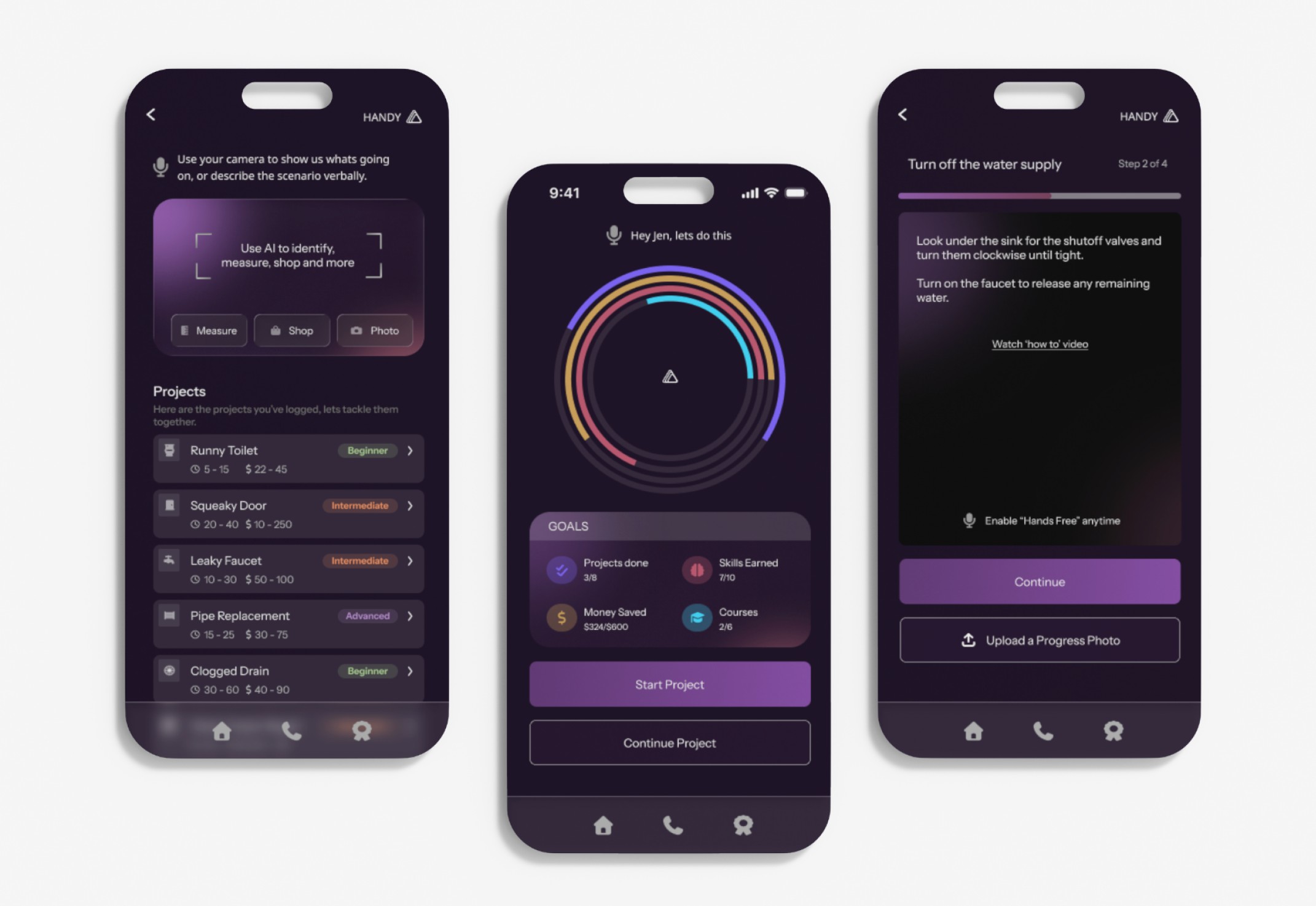
Final deliverables: The final UI leverages brand colors, gradients, glass effect, and intentional iconography to create a modern, polished feel.

UX Decision: Since users' hands are often occupied during DIY tasks, voice activation and bold, scannable CTAs were essential design considerations.

Challenge: Avoid user frustration during complicated projects and troubleshooting.

Solution: Provide clear, trackable progress through the progress bar, make steps clear and concise and include an ‘upload a progress photo’ option so the AI feature can maintain contextual support.

Test Builder

Explore

Pause

Explore

Discovery: My process begins with competitive analysis and journey mapping to define the problem space and establish clear user goals. When possible, I pair this with direct jobs-to-be-done validation to ensure the solution reflects real user behavior. I then iterate through wireframes, heuristic evaluation, and usability testing to improve clarity, safety, and task success.

UX Decision: The home screen was designed around early success metrics to drive retention. The goals tracker serves as a core motivator — encouraging users to start and complete projects.

Final deliverables: After many iterations we decided to go with a dark theme to invoke confidence and authority, both important when engaging with DIY challenges.