Pause

Problem statement: Therapy is episodic, but emotions are continuous. Patients often forget or struggle to articulate what they experienced between sessions, which leads to shallow conversations and slower progress in therapy.
Target audience: Therapy Patients: Motivated to grow but struggle with emotional articulation, experience feelings in real time but forget them later, want deeper therapy sessions. Secondary User: Therapists: Limited session time, need better context between visits, want higher signal, less recap.
Jobs to be done: Capture emotions in real time, reflect on experiences before they fade, bring clearer insights into therapy sessions. Feel understood without being judged, make therapy feel more productive, reduce frustration after sessions , show up prepared and self-aware in therapy.
Decision making: Reference to UX/UI best practices, direct user feedback, how well success matrices are met.
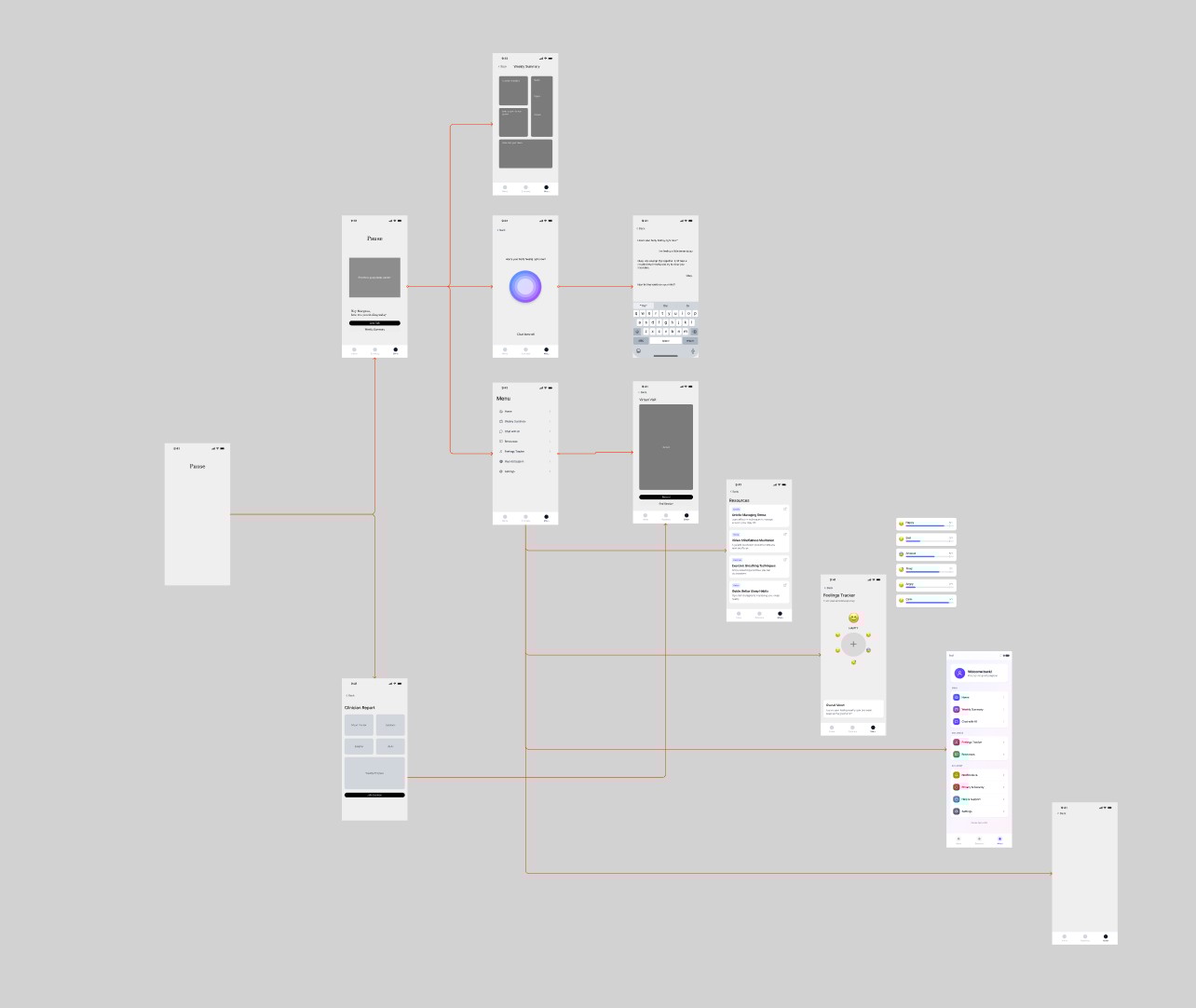
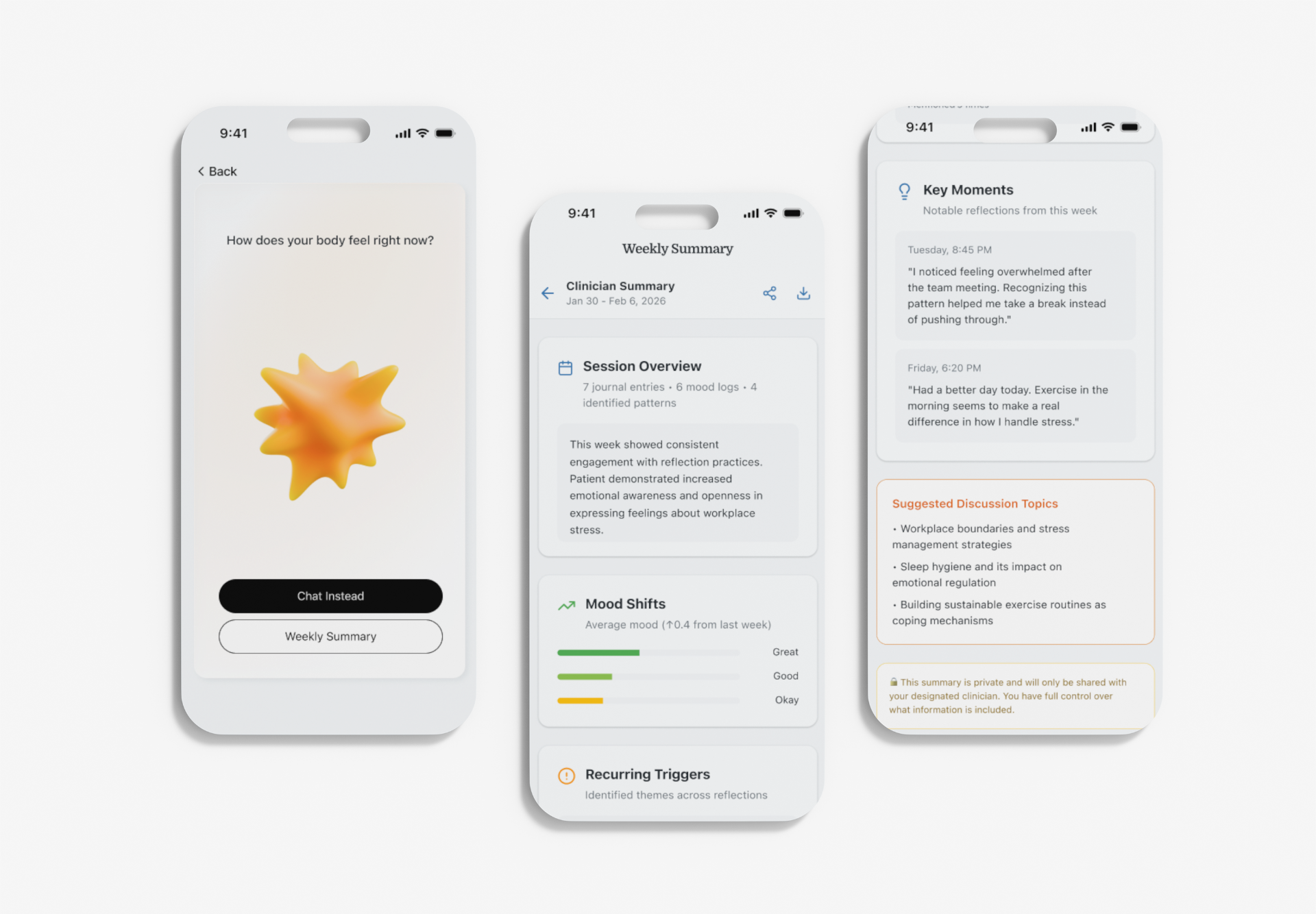
Testing: showed that presenting emotions through percentages and fractions created confusion, as users were often unsure what those metrics actually represented. From that I opted for verbal and qualitative feedback only.
Testing: Several participants expressed that they valued the depth of AI-guided reflection more than a traditional feelings tracker alone.
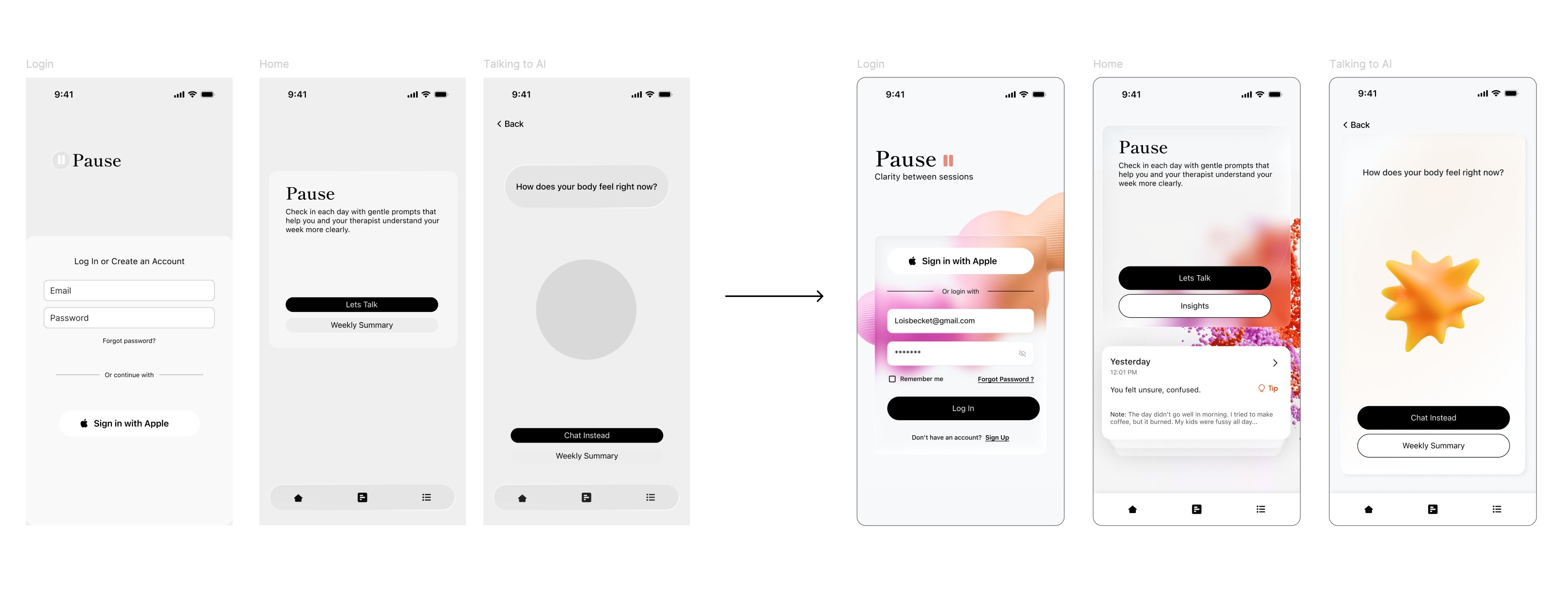
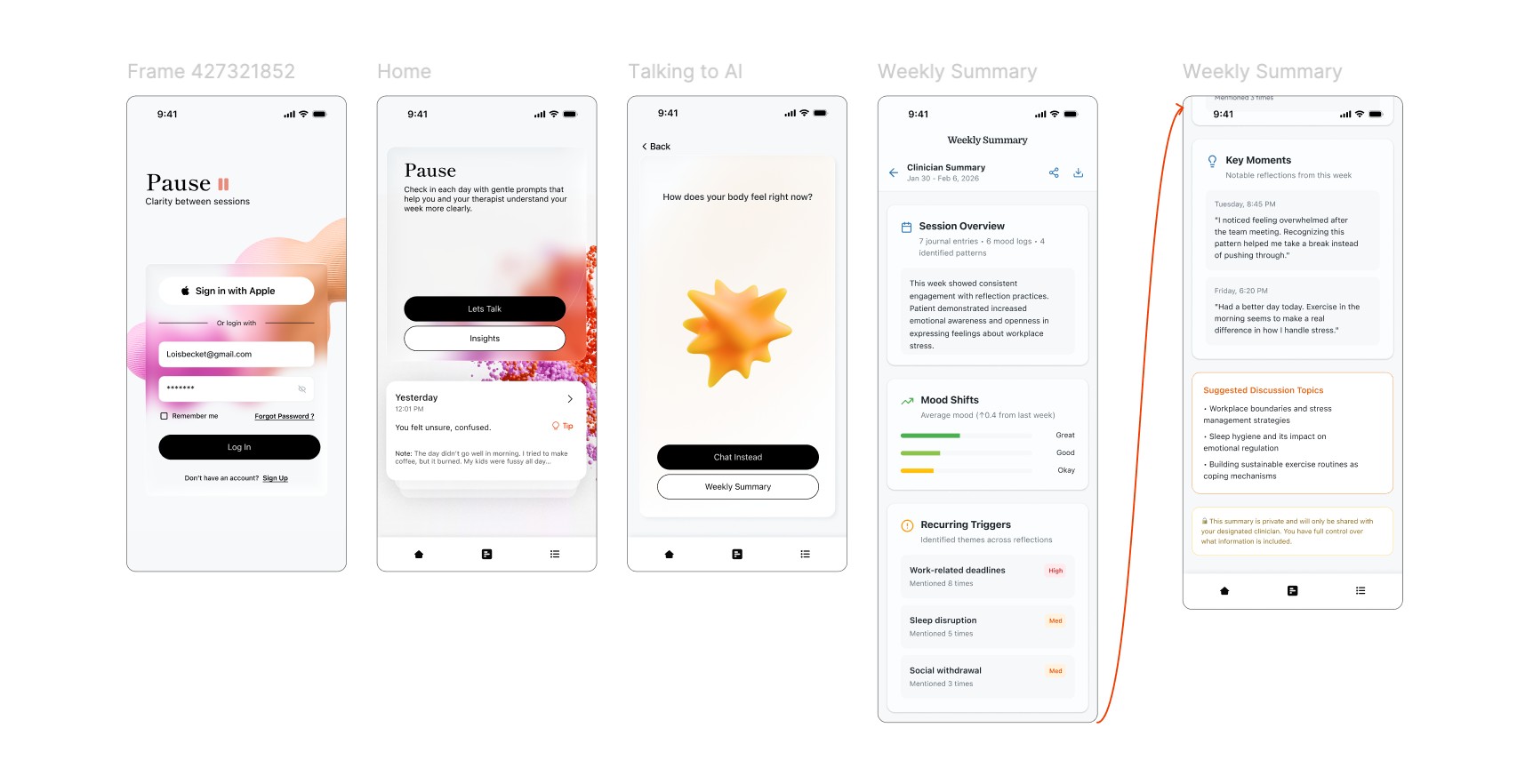
Discovery: Once the product vision is clear, I move quickly into research and early discovery. I start with lightweight methods like interviews, surveys, and guided conversations to understand user needs, behaviors, and emotional context. In parallel, I run competitive scans and map the end-to-end journey to identify gaps and high-impact moments. From there, I transition rapidly into low-fidelity wireframes.

Morgann Bright
Home
About
Pause

Problem statement: Therapy is episodic, but emotions are continuous. Patients often forget or struggle to articulate what they experienced between sessions, which leads to shallow conversations and slower progress in therapy.
Target audience: Therapy Patients: Motivated to grow but struggle with emotional articulation, experience feelings in real time but forget them later, want deeper therapy sessions. Secondary User: Therapists: Limited session time, need better context between visits, want higher signal, less recap.
Jobs to be done: Capture emotions in real time, reflect on experiences before they fade, bring clearer insights into therapy sessions. Feel understood without being judged, make therapy feel more productive, reduce frustration after sessions , show up prepared and self-aware in therapy.
Decision making: Reference to UX/UI best practices, direct user feedback, how well success matrices are met.
Testing: showed that presenting emotions through percentages and fractions created confusion, as users were often unsure what those metrics actually represented. From that I opted for verbal and qualitative feedback only.
Testing: Several participants expressed that they valued the depth of AI-guided reflection more than a traditional feelings tracker alone.
Discovery: Once the product vision is clear, I move quickly into research and early discovery. I start with lightweight methods like interviews, surveys, and guided conversations to understand user needs, behaviors, and emotional context. In parallel, I run competitive scans and map the end-to-end journey to identify gaps and high-impact moments. From there, I transition rapidly into low-fidelity wireframes.
UX/UI Decision: Early validation confirmed that users value reflection most when it feels lightweight, emotionally safe, and clearly connected to therapy outcomes, not simply mood tracking or chatbot interaction. As a result, we approached language and microcopy with great care. The experience encourages gentle, human conversation, never diagnosing or assigning blame. While guiding users toward deeper awareness through practical, therapist aligned reflection exercises.
Morgann Bright
Home
About
Pause

Problem statement: Therapy is episodic, but emotions are continuous. Patients often forget or struggle to articulate what they experienced between sessions, which leads to shallow conversations and slower progress in therapy.
Target audience: Therapy Patients: Motivated to grow but struggle with emotional articulation, experience feelings in real time but forget them later, want deeper therapy sessions. Secondary User: Therapists: Limited session time, need better context between visits, want higher signal, less recap.
Jobs to be done: Capture emotions in real time, reflect on experiences before they fade, bring clearer insights into therapy sessions. Feel understood without being judged, make therapy feel more productive, reduce frustration after sessions , show up prepared and self-aware in therapy.
Decision making: Reference to UX/UI best practices, direct user feedback, how well success matrices are met.
Testing: Several participants expressed that they valued the depth of AI-guided reflection more than a traditional feelings tracker alone.
Testing: showed that presenting emotions through percentages and fractions created confusion, as users were often unsure what those metrics actually represented. From that I opted for verbal and qualitative feedback only.
Discovery: Once the product vision is clear, I move quickly into research and early discovery. I start with lightweight methods like interviews, surveys, and guided conversations to understand user needs, behaviors, and emotional context. In parallel, I run competitive scans and map the end-to-end journey to identify gaps and high-impact moments. From there, I transition rapidly into low-fidelity wireframes.
UX/UI Decision: Early validation confirmed that users value reflection most when it feels lightweight, emotionally safe, and clearly connected to therapy outcomes, not simply mood tracking or chatbot interaction. As a result, we approached language and microcopy with great care. The experience encourages gentle, human conversation, never diagnosing or assigning blame. While guiding users toward deeper awareness through practical, therapist aligned reflection exercises.